
 Continue with Google
 Continue with Facebook
USD to INR Declines: What It Means for the Indian Economy
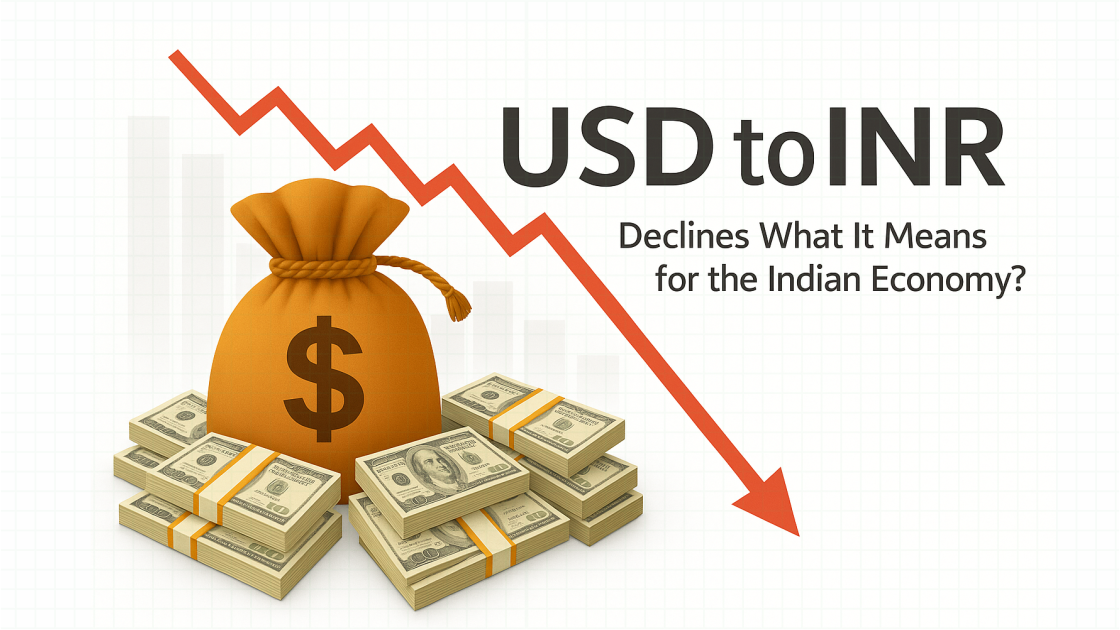
Over the past year, the US Dollar to Indian Rupee (USD/INR) exchange rate has shown significant volatility. After peaking at around ₹87 in early 2025, the exchange rate has now declined to approximately ₹85.35. While this may seem like just a currency fluctuation, the effects ripple across multiple layers of the Indian economy. Here's how a falling USD impacts India:
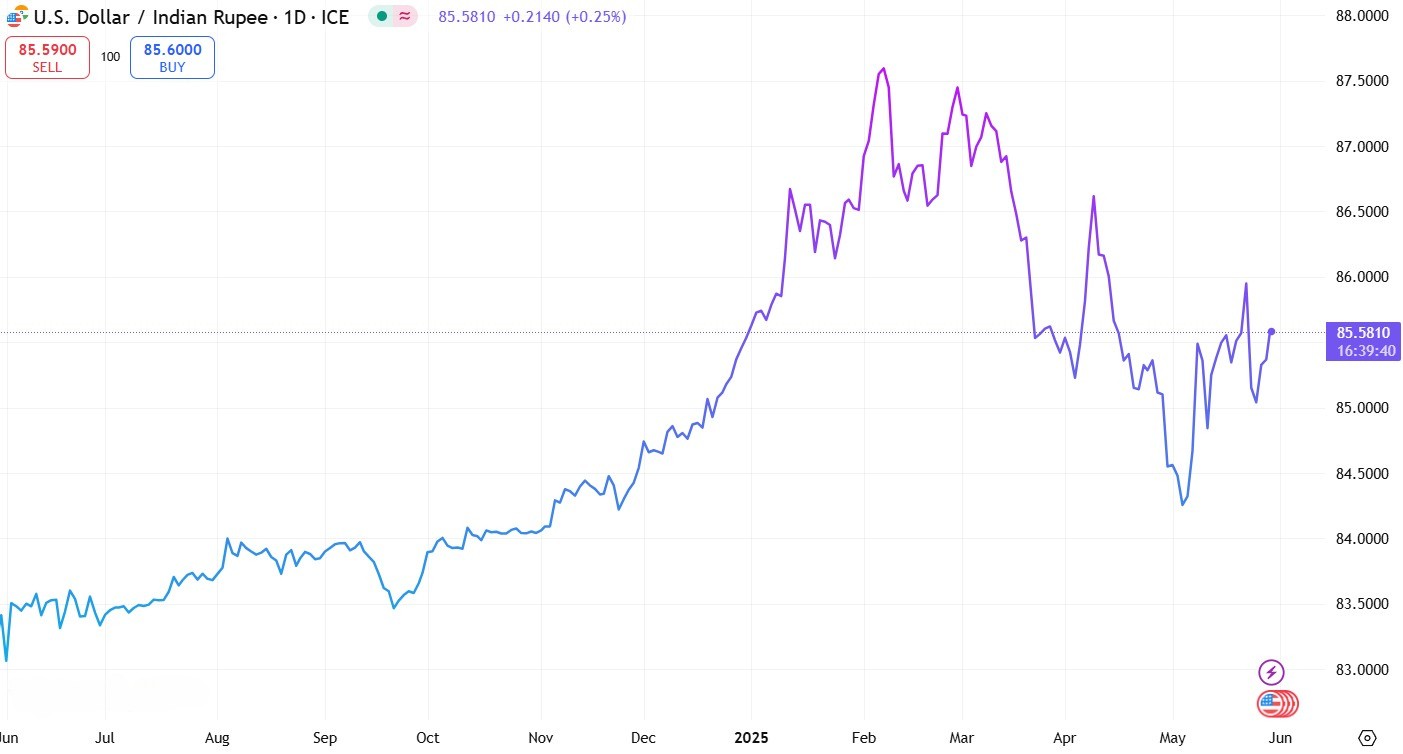
1-Year USD to INR Trend
Boost for Importers
A stronger rupee means Indian businesses pay less in INR for dollar-denominated imports—think crude oil, machinery, and electronics. This helps reduce input costs, especially for industries like:
- Oil & gas
- Pharmaceuticals (dependent on imported APIs)
- Auto and electronics manufacturers
Lower import costs can help bring down inflation and improve corporate margins.
Pressure on Exporters
On the flip side, a weaker dollar makes Indian exports more expensive and less competitive in global markets. This impacts:
- IT and software service firms
- Textile and garment exporters
- Chemical and agro-exporters
These sectors may see revenue pressure in INR terms if the dollar weakens further.
FPI Outflows and Stock Market Volatility
Foreign Portfolio Investors (FPIs) often chase returns in dollar terms. A strengthening rupee might lead some investors to book profits and exit Indian equities or bonds, fearing currency loss. This can lead to short-term volatility in Indian capital markets.
However, if the rupee stabilizes and macro fundamentals stay strong, India may continue to attract long-term FDI and FPI flows.
Impact on Forex Reserves & CAD
A falling USD can help narrow India's Current Account Deficit (CAD), as the import bill drops. Moreover, the RBI might not need to intervene aggressively to stabilize the rupee, preserving foreign exchange reserves.
Relief for Students, Tourists & NRIs
Indians studying abroad or traveling overseas benefit as foreign expenses (tuition, accommodation, shopping) become cheaper in INR terms. NRIs sending remittances back home may find returns slightly lower, but spending power for outbound flows increases.
Conclusion
The decline in the USD-INR rate may seem like a small shift on the chart, but its impact is wide-ranging—from corporate earnings and inflation to trade balance and market sentiment. While importers cheer, exporters tighten their belts. The overall economic impact depends on how long the trend sustains and how the global macroeconomic landscape evolves.
Stay tuned for more updates on the rupee and its implications for your investments and business strategies.
|
You may also be interested to know |
|
|
1. |
From ₹10k To ₹40+ Lakhs: A Masterclass In Patience From Infosys |
|
2. |
|
|
3. |
|
|
4. |
|
|
5. |
|
Check out our blog posts for expert insights, stock analysis, market trends, and the latest updates in the online stock market!
We're Live on WhatsApp! Join our channel for stock market insights & updates!
- Share :


Post a Comment
|
DISCLAIMER |
This report is only for the information of our customers. Recommendations, opinions, or suggestions are given with the understanding that readers acting on this information assume all risks involved. The information provided herein is not to be construed as an offer to buy or sell securities of any kind. ATS and/or its group companies do not as assume any responsibility or liability resulting from the use of such information.